
This journey starts a rainy monday on the streets of Stockholm. On the way to get some coffee I walk by the Korean Cultural Center in Sweden (Koreanskt Kulturcenter) and I decide to check their website for upcoming events. On their website I see an ad for a Kimchi Cooking competition where the competitors have to create their own unique dishes using Kimchi as the star of the show. Having just finished watching Culinary Class War I get very excited about it, and I decide to participate. However, in order to participate I have to create something unique to me that can win over the judges and the deadline to send in a recipe to qualify for the preliminary screening round is closing in fast.
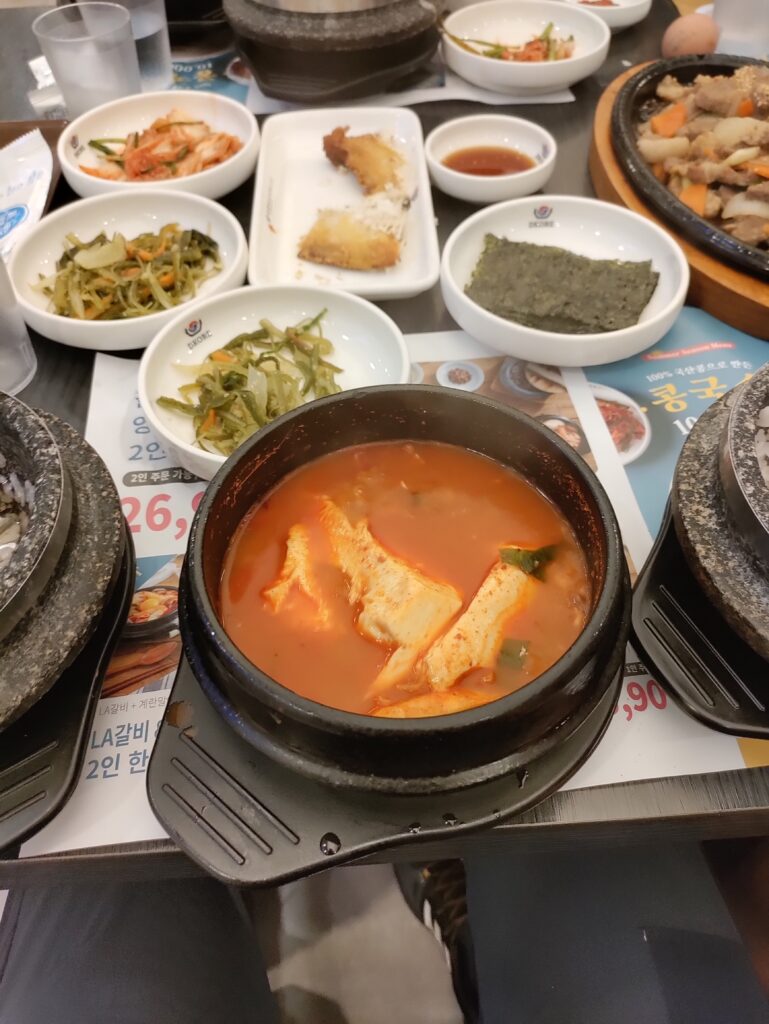
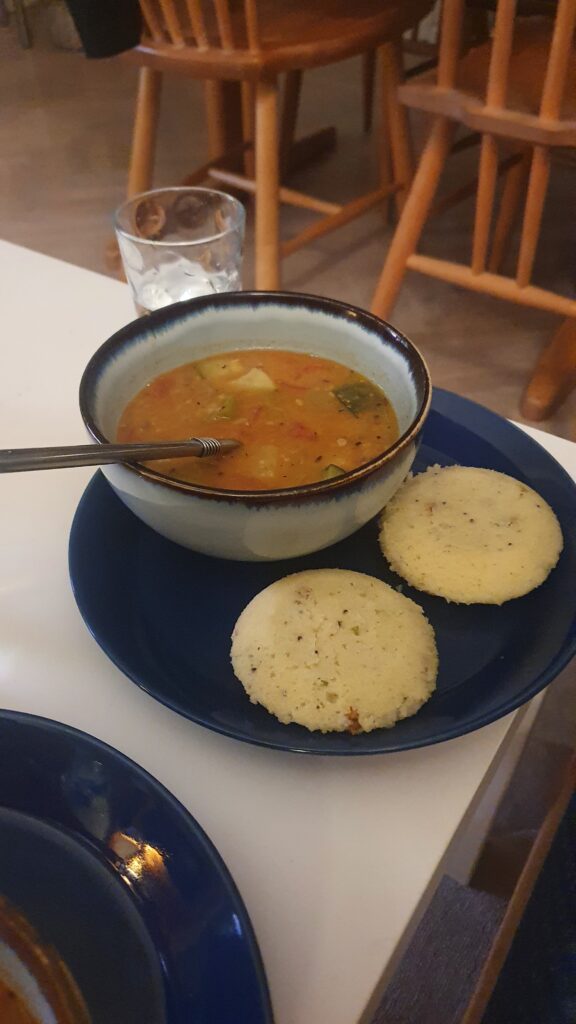
I have been cooking Indian for a few years, since my partner is Indian, and I feel comfortable with the cuisine. Cooking Korean food I started quite recently, after going to Korea as a scout leader in 2023, so it’s a but more unfamiliar to me. I decide to try making something that ties my connections to India with my connections to Korea. What comes into mind is a hearty stew with spices and kimchi, served with rice. Kind of like sambar and kind of like kimchi jjigae (kimchi stew). I start experimenting at home and I try to see how I can combine elements from these two dishes and make it into one. After some trial and error I manage to get something good enough to send in for the competition.
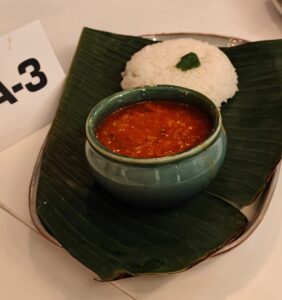
Time passes and I forget about the competition. Then one day I get a response from the organisers. To my happy surprise I have passed the first round of the competition and they have narrowed it down to 8 finalists who will participate in a 60 minute cook off with a live audience. The date of the competition comes and I get to the place. It’s just like in culinary class wars, stepping into the venue. There are 8 kitchen islands, two judges and a small audience. When the time starts I get a bit stressed. Will I be able to make it in time? What if it doesn’t suit their palate? But as I start chopping, all that goes away and I get into my zone. The pressure releases as the toor dal gets done and suddenly my dish is on the banana leaves, ready for serving.
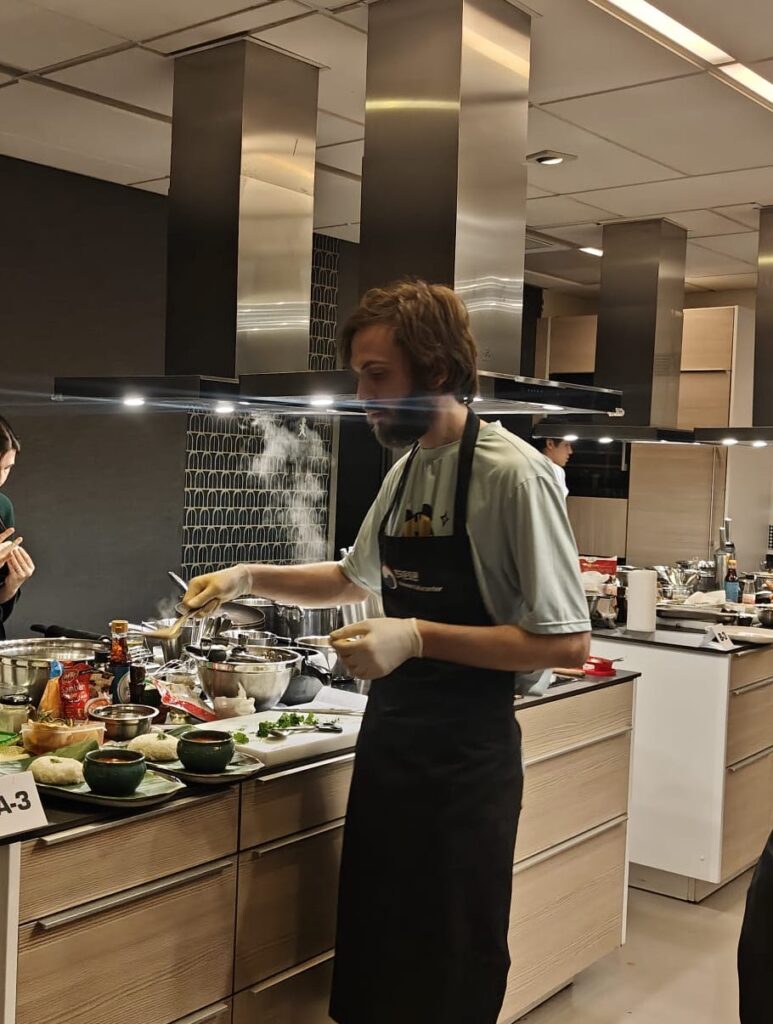
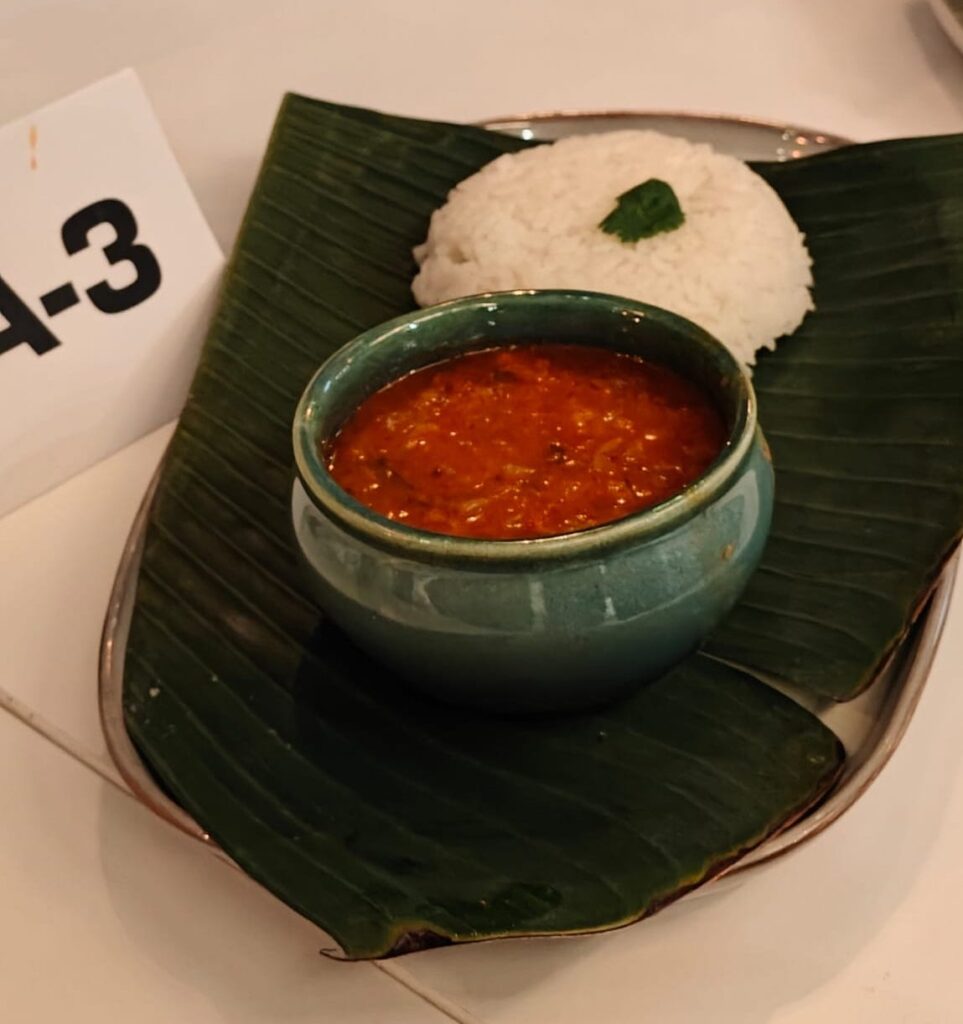
As the judges start going around to taste I hear another participant saying he avoided coriander because many Koreans don’t like it. Oh shoot, how did I miss this? I also see a lot of the participants use expensive ingredients like scallops and beef while I have a vegetarian stew made out of very inexpensive ingredients. Will it be able to beat these odds? The judges do a summary of each dish, giving everyone their due praise, and then it lands on me, and they say it was interesting… I look at my partner and we both think oh well, it was a good run! They announce the third and second place and in my head I have already accepted the outcome, but then suddenly they call out my name??

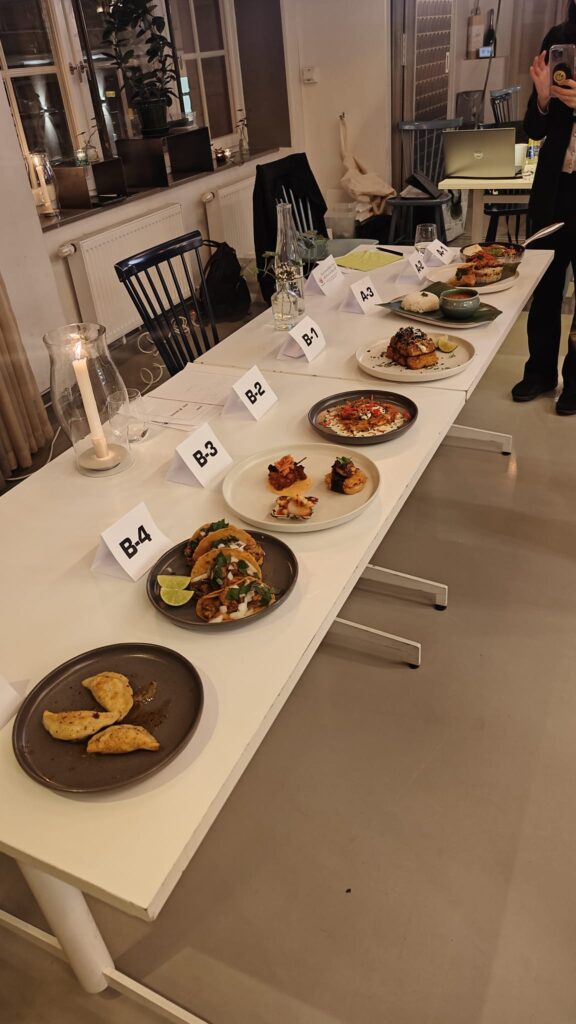

I had a lovely time at the competition, especially getting to meet and talk to the judges, the staff and the other participants. It was really interesting to see how everyone interpreted the challenge (you can see the other participants dishes here) and I was happy to see people enjoying my cooking. I hope that you also try my recipe and let me know what you think about it. Thank you!
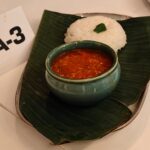
Kimchi Sambar
Equipment
- 1 Pressure cooker optional
- 1 Potato masher optional
Ingredients
Toor Dal
- 2 dl Toor Dal
- 5 dl Water
Sambar
- 1 tbsp Vegetable oil
- 2 small Onion, diced
- 50 g Butter
- 2 tbsp Gochujang
- 1 medium Tomato, diced
- 500 g Cabbage Kimchi (including brine), diced
- 1 liter Water
- 0,5 tsp Tumeric
- 2 tbsp Sambar Powder
- 2 tsp Salt
- 0,5 dl Coriander leaves, chopped
Temper
- 1 tbsp Ghee
- 0,5 tsp Mustard seeds
- 0,5 tsp Cumin seeds
- 1 pinch Methi seeds
- 1 tbsp Gochagoru
- 5 blades Curry leaves
- 1 ml Asafoetida
For serving
- Steamed rice
Instructions
Toor Dal
- Wash the Toor dal2 dl Toor Dal
- Put 2 dl Toor Dal and 5 dl water in a pressure cooker and let it cook for 2-4 whistles5 dl Water
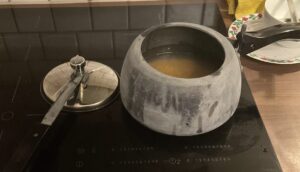
- Mash the cooked Toor Dal with a potato masher
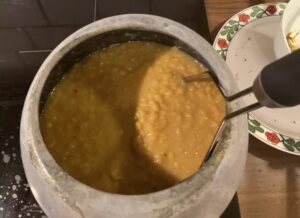
Sambar
- Dice the onion, tomato and kimchi (keep the brine)2 small Onion, diced, 1 medium Tomato, diced, 500 g Cabbage Kimchi (including brine), diced
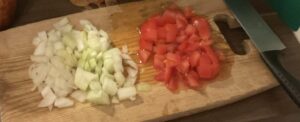
- Saute the onion until it is translucent.2 small Onion, diced, 1 tbsp Vegetable oil
- Add some butter and Gochujang and let it simmer for a few minutes.50 g Butter, 2 tbsp Gochujang
- Add the tomato and kimchi. Saute until mushy.
- Add 1 liter of water and let it boil until the veggies are al-dente1 liter Water
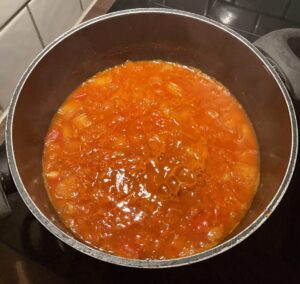
- Add the tumeric, sambar powder and salt. Cook for 3-5 minutes.0,5 tsp Tumeric, 2 tbsp Sambar Powder, 2 tsp Salt
- Add the mashed dal and mix. Bring it to a boil.
- Add chopped coriander leaves.0,5 dl Coriander leaves, chopped
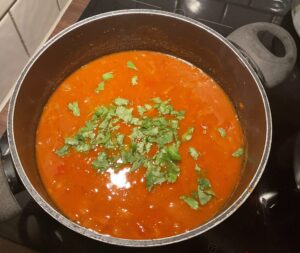
Temper
- Put the ghee in a small pan. Let it get hot.1 tbsp Ghee
- Add the mustard seeds, cumin seeds, methi seeds and curry leaves.0,5 tsp Mustard seeds, 0,5 tsp Cumin seeds, 1 pinch Methi seeds, 5 blades Curry leaves
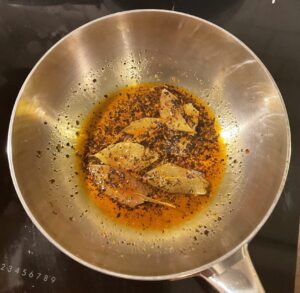
- Once the leaves turn crisp, add the Gochagoru and sprinkle the Atofetida.1 ml Asafoetida, 1 tbsp Gochagoru
- Pour the tempering into the sambar.
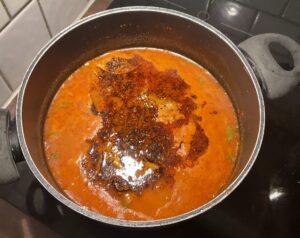
- Let sambar simmer for 2-3 minutes
- Serve with rice and mix.Steamed rice
Leave a Reply